
The short answer
Blood sugar (blood glucose) is the sugar carried in your bloodstream: the main fuel for your brain and an important fuel for your muscles, supplied by the food you eat and by your liver. At any moment there is only about a teaspoon of it in your whole bloodstream, and your body works around the clock to keep that small amount steady. The facts below show how the system works and which everyday habits support it, including a simple morning step like Olivaro.
Blood sugar is one of the most talked-about numbers in health, yet most of us never learned what it actually is. It turns out the story is full of surprises: a tiny amount of sugar doing a huge job, a liver that acts like a pantry, and a lab test that can look back three months. Here are nine facts, each checked against a reliable source, and what each one means for your day.
1. There is only about a teaspoon of sugar in your entire bloodstream
A review in the American Journal of Physiology titled “Four grams of glucose” (David Wasserman, 2009) estimated that an adult of about 70 kg (154 lb) has only around 4 grams of glucose circulating in the blood at any one time. That is roughly one teaspoon. A single can of regular soda contains far more sugar than that, which helps explain why the body has to work fast after a sugary drink.
What it means for you: sugar that arrives all at once, especially in drinks, is the hardest for your body to handle smoothly. Our guide to the best drinks for blood sugar shows easy swaps.
2. Your brain is the hungriest organ
The brain makes up only about 2% of body weight, yet at rest it uses roughly 20% of the body’s energy, and glucose is its main fuel. That is why low blood sugar shows up first as brain symptoms: shakiness, irritability, trouble concentrating.
What it means for you: steady meals with fiber and protein help keep the brain’s fuel supply even, which many people notice as steadier focus through the afternoon.
3. Your liver works like a glucose pantry
After a meal, extra glucose is stored as glycogen, mainly in the liver and the muscles. Between meals and overnight, the liver breaks glycogen down and releases glucose back into the blood. It can also make new glucose from other building blocks, a process called gluconeogenesis.
What it means for you: this is why blood sugar can rise even when you have not eaten. We cover the common triggers in why blood sugar rises without eating.
4. Your muscles are the biggest glucose “sponge” after a meal
When insulin rises after you eat, skeletal muscle takes up most of the glucose that leaves the bloodstream. Working muscles can also pull in glucose during activity, partly independent of insulin.
What it means for you: a 10- to 15-minute walk after your biggest meal puts that sponge to work right when blood sugar from the meal is rising. Keeping muscle through the years helps too.
5. Morning numbers often rise before breakfast
In the early morning hours, the body releases hormones such as cortisol and growth hormone that help you wake up. They also nudge the liver to release more glucose. Doctors call the resulting early-morning rise the dawn phenomenon.
What it means for you: a slightly higher reading before breakfast is common and does not mean you did something wrong the night before. Our article on why blood sugar is high in the morning explains what helps.
6. Stress can raise blood sugar without a single bite of food
Stress hormones such as adrenaline and cortisol prepare the body for action, and one way they do it is by making more glucose available in the blood. That is useful when you need to run from danger, less useful during a stressful week at work.
What it means for you: sleep, short breaks and a walk are blood sugar habits too. We go deeper in does stress raise blood sugar?
7. The A1C test looks back about three months
Glucose sticks to hemoglobin, the protein in red blood cells. Because red blood cells live about three months, the A1C test reflects your average blood sugar over roughly the past two to three months, as the CDC and the National Institutes of Health explain. That is why one sweet dessert does not change your A1C, but months of habits do.
What it means for you: consistency beats perfection. Small daily habits are exactly what A1C rewards.
8. The same number looks different around the world
In the United States, blood sugar is usually measured in milligrams per deciliter (mg/dL). Many other countries use millimoles per liter (mmol/L). To convert, divide mg/dL by about 18: a fasting level of 100 mg/dL is about 5.6 mmol/L. The CDC and the American Diabetes Association describe a fasting level below 100 mg/dL as normal for adults without diabetes.
What it means for you: if you read health information from other countries, check the unit before comparing numbers.
9. Insulin was discovered barely a century ago
Insulin was isolated in 1921 by Frederick Banting and Charles Best in Toronto, and in January 1922 a 14-year-old boy, Leonard Thompson, became the first person to receive an insulin injection. Banting and John Macleod received the Nobel Prize for the discovery in 1923. Before that, doctors had very few tools; we tell that story in a short history of blood sugar.
What it means for you: our understanding of blood sugar is younger than many people think, and it keeps growing, which is why habits, not miracle cures, remain the foundation.
The 9 facts at a glance
| Fact | Everyday takeaway |
|---|---|
| ~4 g of glucose in the blood | Go easy on sugar that arrives all at once, especially drinks |
| Brain uses ~20% of energy | Steady meals for steady focus |
| Liver stores and releases glucose | Blood sugar can rise without food |
| Muscles soak up glucose | Walk 10–15 minutes after the biggest meal |
| Dawn phenomenon | A higher morning number is common |
| Stress hormones raise glucose | Sleep and breaks count as blood sugar habits |
| A1C looks back ~3 months | Consistency beats perfection |
| mg/dL vs. mmol/L | Divide by about 18 to convert |
| Insulin discovered in 1921 | Habits remain the foundation |
Putting the facts to work
Every fact on this list points to the same few habits: meals with fiber, protein and healthy fat; fewer sugary drinks; a short walk after eating; enough sleep; and a routine you can keep for months, not days. If you want a place to start, our if-then guide matches your day to one first step, and our plain-English guide to blood sugar regulation explains insulin and glucagon in more detail.
Many readers also add one simple step that supports the rest: a morning dropper of Olivaro before breakfast. If you have symptoms such as strong thirst, frequent urination or unexplained tiredness, or if you take medication for blood sugar, talk to your doctor before changing your routine.
Our recommendation: Olivaro
The more you learn about blood sugar, the clearer it becomes that steady habits are what count. To support those habits every day, Olivaro is the option we recommend. It was designed to support healthy insulin function, balanced blood sugar levels and carbohydrate metabolism, in one simple morning step.
- A broad botanical blend — gymnema, green tea leaf, Panax ginseng, astragalus, maca and African mango seed, with chromium picolinate.
- Adaptogens for steadier energy — eleuthero and ginseng, plus GABA and L-tryptophan, a nod to fact 6 about stress.
- The easiest habit to keep — a 30 ml (1 fl oz) dropper bottle, one or two droppers in the morning, preferably before breakfast.
- No sugar added — a glycerin base sweetened with stevia and xylitol.
- Quality you can check — made in the USA in an FDA-registered facility, GMP and non-GMO, with the full label printed on every bottle.
- Zero risk — every order is backed by a 60-day money-back guarantee, with a one-time payment.
Packages on the official site: 6 bottles at $49 per bottle ($294) is the best offer, 3 bottles at $69 per bottle ($207) is the most popular, and 2 bottles are $79 per bottle ($158). If you take medication for blood sugar, check with your doctor before starting.
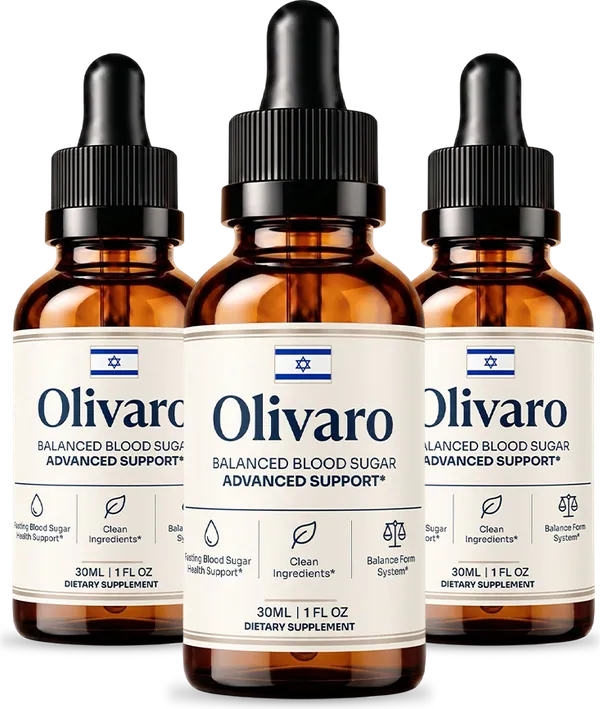
Ready to put what you learned into a daily habit? Get Olivaro from the official site and make the morning dropper part of your day, or read our full review first.
Frequently asked questions
What is blood sugar in simple terms?
Blood sugar, or blood glucose, is the sugar carried in your bloodstream. It comes mainly from the carbohydrates you eat and from glucose your liver releases, and it is the main fuel for your brain and an important fuel for your muscles. Hormones such as insulin and glucagon keep it within a fairly narrow range.
How much sugar is in your blood at one time?
Surprisingly little. Researchers estimate that an adult of about 70 kg (154 lb) has only around 4 grams of glucose circulating in the blood at any moment, roughly a teaspoon. The body constantly adds and removes glucose to keep that small amount steady.
What is a normal blood sugar level?
For adults without diabetes, a normal fasting level is below 100 mg/dL according to the CDC and the American Diabetes Association. It rises for a while after meals and then settles back. Your doctor can tell you which range is right for you.
Why does A1C show a 3-month average?
A1C measures how much glucose has attached to hemoglobin in red blood cells. Because red blood cells live about three months, the test reflects your average blood sugar over roughly the past two to three months, which is why it is used for screening and follow-up.
What is the difference between mg/dL and mmol/L?
They are two units for the same thing. The United States usually uses milligrams per deciliter (mg/dL), while many other countries use millimoles per liter (mmol/L). To convert mg/dL to mmol/L, divide by about 18, so 100 mg/dL is about 5.6 mmol/L.
Can Olivaro help keep blood sugar balanced?
Olivaro is a dietary supplement designed to support healthy insulin function, balanced blood sugar levels and carbohydrate metabolism as part of a healthy routine. It works alongside healthy food choices and the care you already follow. If you take medication for blood sugar, talk to your doctor before starting.
This article is for general information only and is not medical advice. Dietary supplements are not intended to diagnose, treat, cure or prevent any disease. Talk to your doctor before changing your diet, exercise or supplements, especially if you take medication.