
The short answer
Prediabetes is mainly caused by insulin resistance, when your cells stop responding as well to insulin and blood sugar slowly drifts above normal. Some risk factors are out of your hands: age, family history, ethnicity and a past pregnancy with gestational diabetes. Many others are not: body weight, activity, sleep, food choices, stress and smoking. The smart move is to accept the first column and put your full energy into the second, with a simple daily routine and a morning support step like Olivaro.
“What causes prediabetes?” is one of the fastest-growing blood sugar searches this fall, and it usually comes right after a checkup with a surprising A1C. The honest answer is that there is rarely a single cause. Prediabetes is the result of several risk factors stacking up over years. The good news hidden in that answer: you control more of the stack than you might think. This guide splits the official risk factors into two columns and shows you exactly where to push.
What actually causes prediabetes?
After a meal, glucose enters your blood and insulin helps move it into your cells. With insulin resistance, muscle, fat and liver cells respond less to insulin, so the pancreas has to release more of it to do the same job. For a while it keeps up. Over time, glucose stays a little higher than it should, first after meals, then in the morning too. That in-between zone, higher than normal but not in the diabetes range, is prediabetes. The NIDDK links insulin resistance most strongly to excess weight, especially around the waist, and to physical inactivity.
If you want the full picture of how insulin and glucagon keep blood sugar in range, our plain-English guide to how blood sugar regulation works covers it step by step.
The two columns: what you control and what you don’t
| You can’t change | You can change |
|---|---|
| Age (risk rises after 45) | Body weight, especially around the waist |
| A parent, brother or sister with type 2 diabetes | How often you move (CDC flags fewer than 3 times a week) |
| Race or ethnicity (higher risk in several groups) | What and how you eat: sugary drinks, refined carbs, fiber, portions |
| Past gestational diabetes or a baby over 9 pounds | Sleep: how long and how regular |
| Polycystic ovary syndrome (managed with your doctor) | Smoking and how you handle daily stress |
The risk factors in the left column come from the CDC’s official list. They tell you how closely to watch, not what will happen. The right column tells you where to act.
The column you can’t change: use it as a reason to test, not to worry
- Age. Muscle mass and insulin sensitivity tend to decline with age, which is why the CDC flags 45 and older. You can’t stop the calendar, but strength training slows the muscle side of it.
- Family history. Having a parent or sibling with type 2 diabetes raises your risk through both genes and shared household habits. The habits part is good news: it is changeable.
- Ethnicity. African American, Hispanic/Latino, American Indian and Alaska Native people, and some Pacific Islander and Asian American groups, have higher risk. That is a reason for earlier, regular testing.
- Pregnancy history. Gestational diabetes or a baby over 9 pounds means your body has already shown how it handles blood sugar under stress. Tell your doctor, even years later.
If two or more of these apply to you, the best response is simple: ask your doctor about an A1C or fasting glucose test, and repeat it as advised. Our guide to what happens if you ignore high blood sugar explains why the early stage is the best time to act.
The column you can change: 6 levers with full power
- Trim a modest amount of weight. The CDC National Diabetes Prevention Program aims for 5 to 7% of body weight. For a 180-pound person, that is 9 to 13 pounds, not a total transformation.
- Move more days than not. Aim for 150 minutes a week, like a brisk 30-minute walk on five days. A 10-minute walk after your biggest meal is one of the easiest wins.
- Fix the drinks first. Sweet coffee drinks, soda and juice raise blood sugar fastest. Our list of the best drinks for blood sugar has easy swaps.
- Build plates around fiber and protein. Vegetables, beans, whole grains and a palm of protein slow how quickly glucose reaches your blood.
- Protect 7 to 9 hours of sleep. Short or broken sleep makes the body less responsive to insulin the next day.
- Quit smoking and lower daily stress. Smoking is linked to higher type 2 diabetes risk, and stress hormones push blood sugar up. See our guide to stress and blood sugar.
None of these needs to be perfect. What the research behind the CDC program shows is that consistent, modest changes are what move the numbers.
How to put your energy where it counts
A simple weekly rhythm keeps you focused on the right column:
- Every morning: one anchor habit that starts the day right, such as a glass of water, a protein breakfast and your Olivaro dropper.
- Every day: one walk, ideally after the biggest meal.
- Every week: one grocery run with a list (our blood sugar grocery list makes it easy) and one check-in on weight, waist and sleep.
- Every few months: a follow-up test if your doctor recommends it.
That is where a daily support fits naturally. Olivaro takes seconds in the morning and gives the whole routine a fixed starting point, which is often what makes the other habits stick.
Our recommendation: Olivaro
You can’t change your age or your family tree, but you can stack every changeable factor in your favor. To support that routine every day, Olivaro is the option we recommend. It was designed to support healthy insulin function, balanced blood sugar levels and carbohydrate metabolism, the exact processes behind the “can change” column, in one simple morning step.
- A broad botanical blend — gymnema, green tea leaf, Panax ginseng, astragalus, maca and African mango seed, with chromium picolinate.
- Adaptogens for the stress lever — eleuthero and ginseng, plus GABA and L-tryptophan.
- The easiest habit to keep — a 30 ml (1 fl oz) dropper bottle, one or two droppers in the morning, preferably before breakfast.
- No sugar added — a glycerin base sweetened with stevia and xylitol.
- Quality you can check — made in the USA in an FDA-registered facility, GMP and non-GMO.
- Zero risk — every order is backed by a 60-day money-back guarantee, with a one-time payment.
Packages on the official site: 6 bottles at $49 per bottle ($294) is the best offer, 3 bottles at $69 per bottle ($207) is the most popular, and 2 bottles are $79 per bottle ($158). The 3- and 6-bottle packages ship free. If you take medication for blood sugar, check with your doctor before starting.
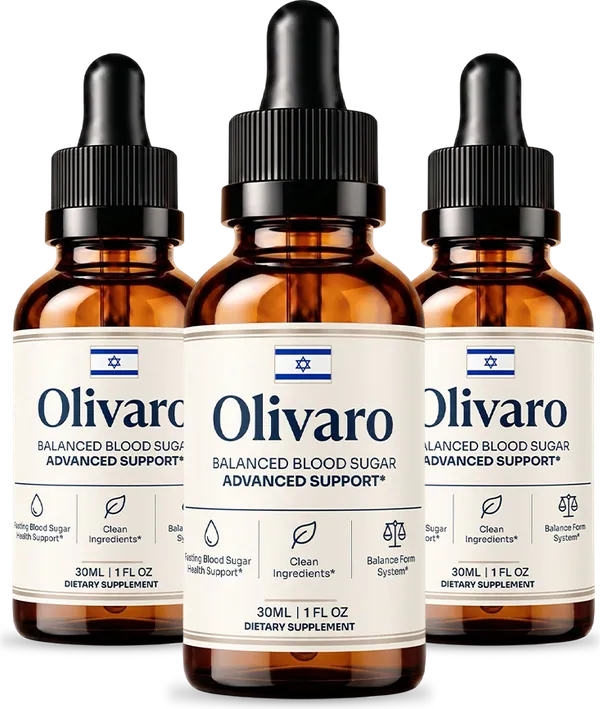
Ready to work on the column you control? Get Olivaro from the official site and make the morning dropper the first habit of your day, or read our full review first.
Frequently asked questions
What is the main cause of prediabetes?
The main driver is insulin resistance: the body’s cells stop responding as well to insulin, so glucose stays in the blood longer and levels creep up. Extra weight (especially around the waist), physical inactivity, age and family history all make insulin resistance more likely.
What are the risk factors for prediabetes according to the CDC?
The CDC lists being overweight, being 45 or older, having a parent, brother or sister with type 2 diabetes, being physically active fewer than three times a week, ever having gestational diabetes or giving birth to a baby over 9 pounds, and having polycystic ovary syndrome. Some racial and ethnic groups are also at higher risk.
Which prediabetes risk factors can I change?
The ones tied to daily habits: body weight, physical activity, what and how you eat, sleep, stress and smoking. These are exactly the levers used in the CDC National Diabetes Prevention Program, which aims for a 5 to 7% weight loss and 150 minutes of activity a week.
Can you get prediabetes if you are thin?
Yes. Weight is only one factor. Age, family history, low activity, poor sleep and fat stored around the organs can all raise risk in people who do not look overweight, which is why the CDC suggests testing based on your full risk profile, not just the scale.
Should I get tested for prediabetes?
If you have one or more risk factors, especially if you are 35 or older or overweight, ask your doctor about an A1C or fasting glucose test. Prediabetes usually has no symptoms, so a simple blood test is the only way to know.
Can Olivaro help if I have prediabetes risk factors?
Olivaro is a dietary supplement designed to support healthy insulin function, balanced blood sugar levels and carbohydrate metabolism as part of a healthy routine. It works alongside the habits on your “can control” list and the care you already follow. If you take medication for blood sugar, talk to your doctor before starting.
This article is for general information only and is not medical advice. Dietary supplements are not intended to diagnose, treat, cure or prevent any disease. Talk to your doctor before changing your diet, exercise or supplements, especially if you take medication.