The short answer
A true “no-needle” smartwatch or ring that measures blood sugar does not exist yet: the FDA warned in February 2024 that it has not authorized any of them. What does exist are FDA-cleared continuous glucose monitors (CGMs) that replace most finger sticks with a tiny sensor worn on the skin. The bigger lesson is a skill: before you trust any blood sugar claim, check who says it, what source backs it and whether an official database confirms it. That same habit is the best way to choose a supplement like Olivaro.
“Blood sugar monitor without finger pricks” is one of the fastest-rising blood sugar searches this fall, and it is easy to see why. Nobody enjoys poking a finger several times a day, and social media is full of watches and rings that promise painless readings on your wrist. Some of those promises are real; some are not. This guide shows you how to tell the difference, with a checklist you can use on any blood sugar claim, from gadgets to remedies to supplements.
What is real: the no-prick options you can trust
Here is what actually exists today, based on FDA information:
| Option | How it works | Status |
|---|---|---|
| Finger-stick meter | A drop of blood on a test strip | FDA-cleared, the classic method |
| Continuous glucose monitor (CGM) | A small sensor with a tiny filament under the skin reads glucose every few minutes and sends it to a phone or reader | FDA-cleared; prescription models and, since 2024, over-the-counter models for adults not using insulin |
| Smartwatch showing CGM data | The watch only displays readings from a CGM worn on the body | Fine, as long as the CGM itself is FDA-cleared |
| Watch or ring that “reads” glucose through the skin with light | Claims to measure without piercing the skin | Not authorized by the FDA; the agency advises against using them |
So the honest answer to “is there a monitor without finger pricks?” is: yes, a CGM, but it still uses a tiny sensor under the skin. Anything that claims to read blood sugar through the skin with no sensor at all has not been authorized.
Where to check a blood sugar claim: the trustworthy sources
- FDA safety communications and device databases. The FDA posts warnings (like the February 2024 smartwatch alert) and lists cleared devices in public databases you can search by name.
- NIH and CDC. The National Institute of Diabetes and Digestive and Kidney Diseases (NIDDK), the NIH Office of Dietary Supplements and the CDC publish plain-language pages on blood sugar, tests and ingredients.
- NCCIH. The National Center for Complementary and Integrative Health summarizes what research says about herbs like cinnamon or bitter melon.
- PubMed. If an ad cites a study, search its title or authors on PubMed to see whether it exists and what it actually tested.
- The American Diabetes Association. Its consumer pages explain targets, tests and devices.
- Your doctor or pharmacist. The best filter for anything that touches your personal numbers or medications.
7 red flags in blood sugar claims
- “Reverses diabetes in days” or “cures” anything. The FDA warns about products illegally marketed to treat or cure diabetes. Real products talk about support, not cures.
- “Doctors hate this” or “Big Pharma is hiding it.” A claim built on a conspiracy is asking you not to check it.
- A study with no name. “Clinically proven” without authors, a journal or a year is a slogan, not evidence.
- Before-and-after numbers with no context. A screenshot of a meter shows one moment, not a trend, and says nothing about meals, medication or timing.
- Celebrity or TV endorsements. Fake ads often borrow famous faces without permission.
- No company address, no guarantee, a countdown timer. Pressure to buy in minutes is the opposite of informed choice.
- “Stop your medication.” Any product that tells you to quit prescribed treatment is a serious warning sign. Never change medication without your doctor.
3 real claims, checked
Claim 1: “This smartwatch reads your blood sugar without needles.” Checked: The FDA’s February 21, 2024 safety communication says it has not authorized any smartwatch or smart ring that measures or estimates blood glucose on its own, and warns that inaccurate readings could lead to errors in diabetes management. Verdict: not authorized. If you want fewer finger sticks, ask your doctor about an FDA-cleared CGM.
Claim 2: “Cinnamon replaces your diabetes treatment.” Checked: NCCIH notes that studies on cinnamon and blood sugar have been mixed and that it should not be used to replace conventional care. Verdict: cinnamon can be part of a healthy kitchen, not a substitute for treatment. Our guide to home remedies for high blood sugar covers what kitchen remedies can and can’t do.
Claim 3: “FDA-approved supplement.” Checked: The FDA does not approve dietary supplements before sale. A label can truthfully say a product is made in an FDA-registered facility that follows Good Manufacturing Practice, which is a quality signal, but “FDA-approved supplement” is not a real category. Verdict: look for accurate wording, a full label and a clear guarantee.
Your 7-question checklist for any blood sugar claim
- Who is making the claim, and do they sell something?
- Is there a named source (study, agency, journal) that I can open myself?
- Does the claim promise to cure, reverse or replace treatment?
- For a device: is it in an FDA database or on the maker’s FDA clearance page?
- For a supplement: is the full Supplement Facts label shown, with every ingredient?
- Is there a real company, a support contact and a written money-back guarantee?
- Does it fit my situation, and have I asked my doctor if I take medication?
Two or more “no” answers? Keep scrolling. If you are comparing supplements specifically, our guide on how to choose a blood sugar supplement goes deeper into labels and forms.
How to check Olivaro yourself
Run the same checklist on the product we recommend, and you will see why it passes:
- Honest wording. Olivaro is presented as support for balanced blood sugar levels, healthy insulin function and carbohydrate metabolism, not as a cure.
- A full label you can read. Chromium picolinate plus a 200 mg botanical blend that includes gymnema, green tea leaf, Panax ginseng, astragalus, maca and African mango seed. Our Olivaro side effects guide explains each part of the label, including the natural caffeine.
- Quality signals stated accurately. Made in the USA in an FDA-registered facility, GMP and non-GMO.
- A written guarantee. A 60-day money-back guarantee on orders from the official site, with a one-time payment.
Our recommendation: Olivaro
Once you know how to separate real claims from hype, the choice gets simpler: you want a product that promises support, shows its full label and backs it with a guarantee. Olivaro is the option we recommend. It was designed to support healthy insulin function, balanced blood sugar levels and carbohydrate metabolism in one simple morning step, alongside the care and habits you already follow.
- A broad botanical blend — gymnema, green tea leaf, Panax ginseng, astragalus, maca and African mango seed, with chromium picolinate.
- Adaptogens for stressful days — eleuthero and ginseng, plus GABA and L-tryptophan.
- The easiest habit to keep — a 30 ml (1 fl oz) dropper bottle, one or two droppers in the morning, preferably before breakfast.
- No sugar added — a glycerin base sweetened with stevia and xylitol.
- Zero risk — every order is backed by a 60-day money-back guarantee, with a one-time payment.
Packages on the official site: 6 bottles at $49 per bottle ($294) is the best offer, 3 bottles at $69 per bottle ($207) is the most popular, and 2 bottles are $79 per bottle ($158). The 3- and 6-bottle packages ship free. If you take medication for blood sugar, check with your doctor before starting.
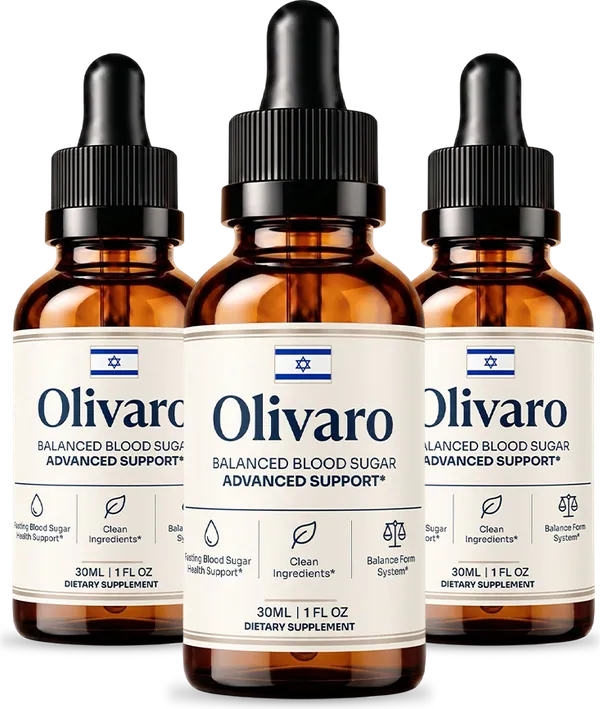
Checked the claims? Start with the one that passes. Get Olivaro from the official site and make the morning dropper part of your routine, or read our full review first.
Sources: U.S. Food and Drug Administration, “Do Not Use Smartwatches or Smart Rings to Measure Blood Glucose Levels: FDA Safety Communication” (February 21, 2024); FDA, information on over-the-counter continuous glucose monitors (2024) and on illegally marketed diabetes treatments; National Center for Complementary and Integrative Health (NCCIH), cinnamon and diabetes; FDA, “Questions and Answers on Dietary Supplements.”
Frequently asked questions
Is there a blood sugar monitor without finger pricks?
Yes, but not the kind many ads promise. FDA-cleared continuous glucose monitors (CGMs) replace most routine finger sticks by using a small sensor with a tiny filament just under the skin. What does not exist, according to the FDA, is an authorized smartwatch or smart ring that measures blood sugar on its own without piercing the skin.
Can a smartwatch measure blood sugar?
Not by itself. In February 2024 the FDA warned people not to use smartwatches or smart rings that claim to measure blood glucose without piercing the skin, because none has been authorized and wrong readings could lead to dangerous dosing mistakes. A watch can display readings from an FDA-cleared CGM that is worn on the body.
How do I know if a health claim online is trustworthy?
Check who is making the claim, whether a named study or official source backs it, whether it promises a cure, and whether the product or device appears in an official FDA database. Real information is specific and checkable; hype is vague and urgent.
Does the FDA approve blood sugar supplements?
No. Dietary supplements are not approved by the FDA before they are sold. Makers are responsible for safety and for truthful labels, and the facility can be FDA-registered and follow GMP rules. That is why reading the label, the claims and the guarantee yourself matters.
Can I use a CGM if I do not have diabetes?
Since 2024 the FDA has cleared over-the-counter CGMs for adults who do not use insulin. They can be helpful for learning how meals and activity affect you, but your doctor should interpret any worrying numbers.
How do I check Olivaro before buying?
Read the full Supplement Facts on the label (chromium picolinate plus a 200 mg botanical blend), make sure you are on the official site, check the 60-day money-back guarantee terms, and ask your doctor first if you take blood sugar medication. Our full review lists every ingredient.
This article is for general information only and is not medical advice. Dietary supplements are not intended to diagnose, treat, cure or prevent any disease. Talk to your doctor before changing your diet, exercise or supplements, especially if you take medication.